Monday, 29 January 2024

Defining Data Science and Big data

 Data science and big data are often used interchangeably, but they are distinct concepts with overlapping elements. Here's a breakdown to help you understand the key differences:

Data Science:

  • Concept: A field of study that encompasses the entire process of extracting insights and knowledge from data. This includes collecting, cleaning, analyzing, interpreting, and visualizing data.
  • Focus: Extracting valuable information from data to solve problems, make informed decisions, and support strategic objectives.
  • Skills required: Statistics, mathematics, programming, machine learning, data visualization, communication, problem-solving skills.
  • Tools: R, Python, SQL, data visualization tools (Tableau, Power BI), machine learning libraries (Scikit-learn, TensorFlow)

Big Data:

  • Concept: Refers to large and complex datasets that are difficult to process with traditional methods due to their volume, velocity, variety, and veracity.
  • Focus: Efficiently storing, managing, and processing massive datasets to enable data analysis and insights.
  • Skills required: Programming (Java, Python), distributed computing frameworks (Hadoop, Spark), database management, data engineering.
  • Tools: Hadoop ecosystem (HDFS, MapReduce, Spark), NoSQL databases, cloud computing platforms

Relationship:

  • Big data is a subset of data science: The tools and techniques used in big data are often applied in data science projects involving large datasets.
  • Data science relies on big data: For many data science applications, the ability to handle and analyze big data is crucial.

Here's an analogy:

  • Think of data science as a chef: They gather ingredients (data), prepare them (cleaning and preprocessing), cook them (analysis), and present the dish (insights and visualizations).
  • Big data is the pantry: It provides the chef with a vast array of ingredients in various forms (structured, unstructured) and sizes (small, large).

Scope of Data Science

  • Data Scientist.
  • Machine Learning Scientist.
  • Data Analyst.
  • Business Analyst.
  • Machine Learning Engineer.
  • Data Engineer.
  • Data Architect.
  • Database Administrator.
  • Data Scientist.
  • Machine Learning Engineer.

Scope of Big Data Engineer.

  • Data Architect.
  • Data Modeler.
  • Data Scientist.
  • Database Developer.
  • Database Manager.
  • Database Administrator.
  • Database Analyst.
  • Business Intelligence Analyst.

Skills Needed to Become a Data Science Professional

  1. Probability and Statistics.
  2. Programming Languages and Software.
  3. Machine & Deep Learning.
  4. Calculus and Linear Algebra.
  5. Data Mining.
  6. Data Cleansing.
  7. Data Wrangling.
  8. Natural Language Processing (NLP).
  9. Database Management.
  10. Data Visualisation.
  11. Cloud Computing.
  12. Communication Skills.
  13. Statistics.

Skills Needed to Become a Big Data Professional

  1. Programming Languages.
  2. Machine Learning.
  3. Data Mining.
  4. Predictive Analysis.
  5. Quantitative Analysis.
  6. Data Visualisation.
  7. Apache Spark.
  8. Apache Hadoop.
  9. NoSQL.
  10. Problem-Solving Skills.

Which is the Better Option?

The interconnection of big data and data science only makes your choice easier. In fact, big data is a subset of data science.

In my opinion, both of them are quite fulfilling career options and offer great job opportunities

Friday, 12 January 2024

Binary, octal, decimal, hexadecimal number systems

Computers understand machine language, i.e every letter, symbol etc. that the user writes in the instructions which are provided to the computer gets transformed into machine language. This machine language comprises numbers. To understand the language employed by computers and other digital systems it is essential to have a better knowledge of the number system.

A number system gives a unique representation of numbers. It also enables users to execute arithmetic operations like subtraction, addition, and division which perform an essential role in computer applications and digital domains.

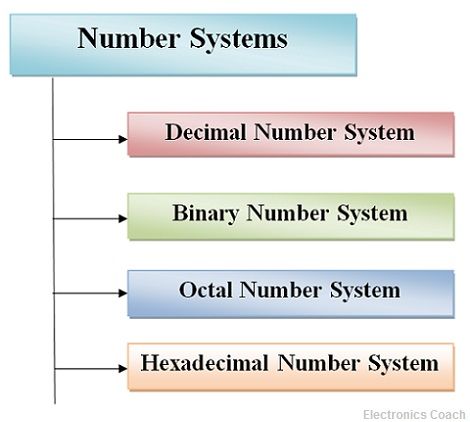
Number systems can be categorized into their sub types based on the base of that system. The base of a number system performs a vital role in understanding the number system and converting it from one sub-type to another sub-type. The base sometimes is also referred to as radix; both these terms hold the same meaning.


1. Decimal Number System (Base 10):

  • The most common system we use in everyday life.
  • Uses digits 0-9 to represent numbers.
  • Place value increases by powers of 10 (10^0, 10^1, 10^2, ...).
  • Example: 123 = 110^2 + 210^1 + 3*10^0

2. Binary Number System (Base 2):

  • Essential for computers, which use binary digits (bits) to represent data.
  • Uses only two digits: 0 and 1.
  • Place value increases by powers of 2 (2^0, 2^1, 2^2, ...).
  • Example: 1011 = 12^3 + 02^2 + 12^1 + 12^0 = 11 (in decimal)


3. Octal Number System (Base 8):

  • Uses digits 0-7.
  • Sometimes used in computing for compact representation.
  • Place value increases by powers of 8 (8^0, 8^1, 8^2, ...).
  • Example: 25 (in octal) = 28^1 + 58^0 = 21 (in decimal)


4. Hexadecimal Number System (Base 16):

  • Widely used in computing for memory addresses and color codes.
  • Uses digits 0-9 and letters A-F (A=10, B=11, ..., F=15).
  • Place value increases by powers of 16 (16^0, 16^1, 16^2, ...).
  • Example: 1A (in hexadecimal) = 116^1 + 1016^0 = 26 (in decimal)


Key Points:

  • The base of a number system determines the number of digits used and their place values.
  • Conversions between different number systems are possible using mathematical formulas.
  • Each system has its specific applications in computing and other fields.

ANU B.Pharmacy 1st, 3rd, 5th Sem Supply Exam Results Oct/Nov 2023

 ANU B.Pharmacy 1st, 3rd, 5th Sem Supply Exam Results Oct/Nov 2023 are now available, the candidates who are looking for results can check their results from here


Check your results from below links

I/IV B.PHARMACY I SEMESTER SUPPLY EXAMINATIONS NOVEMBER-2023 RESULTS.

II/IV B.PHARMACY III SEMESTER SUPPLY EXAMINATIONS OCTOBER-2023 RESULTS. 

III/IV B.PHARMACY V SEMESTER SUPPLY EXAMINATIONS OCTOBER-2023 RESULTS.

Latest Notifications

More

Results

More

Timetables

More

Latest Schlorships

More

Materials

More

Previous Question Papers

More

All syllabus Posts

More

AI Fundamentals Tutorial

More

Data Science and R Tutorial

More
Top