Friday, 2 February 2024

R Nuts and Bolts Part-I

4.1 Entering Input

At the R prompt we type expressions. The <- symbol is the assignment operator.

> x <- 1
> print(x)
[1] 1
> x
[1] 1
> msg <- "hello"

The grammar of the language determines whether an expression is complete or not.

x <-  ## Incomplete expression

The # character indicates a comment. Anything to the right of the # (including the # itself) is ignored. This is the only comment character in R. Unlike some other languages, R does not support multi-line comments or comment blocks.

4.2 Evaluation

When a complete expression is entered at the prompt, it is evaluated and the result of the evaluated expression is returned. The result may be auto-printed.

> x <- 5  ## nothing printed
> x       ## auto-printing occurs
[1] 5
> print(x)  ## explicit printing
[1] 5

The [1] shown in the output indicates that x is a vector and 5 is its first element.

Typically with interactive work, we do not explicitly print objects with the print function; it is much easier to just auto-print them by typing the name of the object and hitting return/enter. However, when writing scripts, functions, or longer programs, there is sometimes a need to explicitly print objects because auto-printing does not work in those settings.

When an R vector is printed you will notice that an index for the vector is printed in square brackets [] on the side. For example, see this integer sequence of length 20.

> x <- 11:30
> x
 [1] 11 12 13 14 15 16 17 18 19 20 21 22
[13] 23 24 25 26 27 28 29 30

The numbers in the square brackets are not part of the vector itself, they are merely part of the printed output.

With R, it’s important that one understand that there is a difference between the actual R object and the manner in which that R object is printed to the console. Often, the printed output may have additional bells and whistles to make the output more friendly to the users. However, these bells and whistles are not inherently part of the object.

Note that the : operator is used to create integer sequences.

4.3 R Objects

R has five basic or “atomic” classes of objects:

  • character

  • numeric (real numbers)

  • integer

  • complex

  • logical (True/False)

The most basic type of R object is a vector. Empty vectors can be created with the vector() function. There is really only one rule about vectors in R, which is that A vector can only contain objects of the same class.

But of course, like any good rule, there is an exception, which is a list, which we will get to a bit later. A list is represented as a vector but can contain objects of different classes. Indeed, that’s usually why we use them.

There is also a class for “raw” objects, but they are not commonly used directly in data analysis and I won’t cover them here.

4.4 Numbers

Numbers in R are generally treated as numeric objects (i.e. double precision real numbers). This means that even if you see a number like “1” or “2” in R, which you might think of as integers, they are likely represented behind the scenes as numeric objects (so something like “1.00” or “2.00”). This isn’t important most of the time…except when it is.

If you explicitly want an integer, you need to specify the L suffix. So entering 1 in R gives you a numeric object; entering 1L explicitly gives you an integer object.

There is also a special number Inf which represents infinity. This allows us to represent entities like 1 / 0. This way, Inf can be used in ordinary calculations; e.g. 1 / Inf is 0.

The value NaN represents an undefined value (“not a number”); e.g. 0 / 0; NaN can also be thought of as a missing value (more on that later)

4.5 Attributes

R objects can have attributes, which are like metadata for the object. These metadata can be very useful in that they help to describe the object. For example, column names on a data frame help to tell us what data are contained in each of the columns. Some examples of R object attributes are

  • names, dimnames

  • dimensions (e.g. matrices, arrays)

  • class (e.g. integer, numeric)

  • length

  • other user-defined attributes/metadata

Attributes of an object (if any) can be accessed using the attributes() function. Not all R objects contain attributes, in which case the attributes() function returns NULL.

4.6 Creating Vectors

The c() function can be used to create vectors of objects by concatenating things together.

> x <- c(0.5, 0.6)       ## numeric
> x <- c(TRUE, FALSE)    ## logical
> x <- c(T, F)           ## logical
> x <- c("a", "b", "c")  ## character
> x <- 9:29              ## integer
> x <- c(1+0i, 2+4i)     ## complex

Note that in the above example, T and F are short-hand ways to specify TRUE and FALSE. However, in general one should try to use the explicit TRUE and FALSE values when indicating logical values. The T and F values are primarily there for when you’re feeling lazy.

You can also use the vector() function to initialize vectors.

> x <- vector("numeric", length = 10) 
> x
 [1] 0 0 0 0 0 0 0 0 0 0

4.7 Mixing Objects

There are occasions when different classes of R objects get mixed together. Sometimes this happens by accident but it can also happen on purpose. So what happens with the following code?

> y <- c(1.7, "a")   ## character
> y <- c(TRUE, 2)    ## numeric
> y <- c("a", TRUE)  ## character

In each case above, we are mixing objects of two different classes in a vector. But remember that the only rule about vectors says this is not allowed. When different objects are mixed in a vector, coercion occurs so that every element in the vector is of the same class.

In the example above, we see the effect of implicit coercion. What R tries to do is find a way to represent all of the objects in the vector in a reasonable fashion. Sometimes this does exactly what you want and…sometimes not. For example, combining a numeric object with a character object will create a character vector, because numbers can usually be easily represented as strings.

R Nuts and Bolts Part-II Check Here

Wednesday, 31 January 2024

ANU LL.B 3 Yr LL.B 3rd Sem & 5 Yr LL.B 3rd, 7th Sem Exam Fee Notification Feb 2024

 ANU LL.B 3 Yr LL.B 3rd Sem & 5 Yr LL.B 3rd, 7th Sem Exam Fee Notification Feb 2024 is now available, the last date for exam fee notification is 12.02.2023


Download official notification from below


Monday, 29 January 2024

Getting Started with R

Taking the first plunge into R might seem daunting, but it's an exciting journey into the world of data analysis and visualization. To make it smooth, let's break down the process into simple steps:

1. Install R and RStudio:

2. Learn the Basics:

3. Explore Data Structures:

  • Understand how R stores and manipulates data through vectors, matrices, data frames, and lists.
  • Practice creating, accessing, and modifying elements within these structures.

4. Perform Basic Operations:

  • Learn fundamental R operators for arithmetic, logical, and data manipulation.
  • Experiment with control flow statements like if, for, and while to control program execution.

5. Visualization is Key:

  • R's ggplot2 package offers powerful tools for creating beautiful and informative plots.
  • Explore basic ggplot2 functions to make scatter plots, bar charts, histograms, and more.

6. Practice Makes Perfect:

  • Work on small projects with real or simulated data sets.
  • Join online communities and forums like Stack Overflow to ask questions and learn from others.
  • Take online courses or follow learning paths to progressively tackle more advanced topics.

History and Overview of R

What is R?

R is a free and open-source software environment for statistical computing and graphics. It's a programming language specifically designed for data analysis and visualization. Its strengths lie in its extensive statistical functionalities, easy-to-learn syntax, and powerful graphical capabilities.

What is S?

S is a similar statistical programming language and environment developed earlier at Bell Laboratories. R owes its origin to S, sharing many core concepts and functionalities. Although R isn't a direct extension of S, much code written for S works within R with some adjustments.

The S Philosophy

The S philosophy emphasizes:

  • Interactivity: Users can run commands and see results immediately, facilitating exploration and experimentation.
  • Conciseness: The language is designed to be compact and expressive, allowing for efficient coding.
  • Extensibility: Users can create and share packages to expand the functionality of R beyond its core features.
  • Data-oriented: Focus is placed on efficient data manipulation and analysis.

Back to R

R builds upon the S philosophy while improving in several areas, including:

  • Object-oriented programming: Provides better structure and organization for large projects.
  • Memory management: Offers more efficient memory handling for complex tasks.
  • Graphical capabilities: Produces publication-quality graphs with rich customization options.

Basic Features of R

  • Data structures: Arrays, matrices, lists, data frames, etc. for organizing and manipulating data.
  • Operators: Mathematical, logical, and data manipulation operators for performing various calculations.
  • Control flow: if, for, while statements for controlling program execution based on conditions.
  • Functions: Built-in and user-defined functions for performing specific tasks.
  • Graphics: Extensive plotting capabilities to visualize data in various ways.

Free Software

R is free and open-source software (FOSS), meaning anyone can download, use, modify, and redistribute it without restrictions. This fosters a vibrant community of developers and users who contribute to its continuous improvement.

Design of the R System

R consists of:

  • The R language: Defines the syntax and structure of the code.
  • The R interpreter: Executes the R code and interacts with the user.
  • Packages: Collections of functions and data that extend R's functionalities beyond its core.
  • CRAN: Central repository for downloading and installing packages.

Limitations of R

While powerful, R has some limitations:

  • Steep learning curve: The syntax and concepts can be challenging for beginners.
  • Memory limitations: Can handle large datasets, but complex analyses may require careful memory management.
  • Debugging difficulties: Tracing errors can be challenging due to the dynamic nature of the language.

R Resources

  • The R Project for Statistical Computing: https://www.r-project.org/
  • RStudio: Popular integrated development environment for R: https://posit.co/
  • DataCamp: Online platform for learning R and data science: https://www.datacamp.com/
  • Books: "The R Book" by Dalgaard, "R in Action" by Cotton, "ggplot2" by Wickham and Grolemund
  • Forums and communities: Stack Overflow, R-Help mailing list, online forums

Data Science Process.

Data science is mostly applied in the context of an organization. When the business asks you to perform a data science project, you’ll first prepare a project charter. This charter contains information such as what
you’re going to research, how the company benefits from that, what data and resources you need, a timetable, and deliverables.


1. Setting the research goal: This initial step involves defining the specific problem or question you want to answer using data. It's crucial to have a clear and well-defined goal to guide the rest of the process.

2. Retrieving data: Once you know what you're looking for, you need to gather the relevant data. This can involve accessing existing data sources, designing and conducting surveys or experiments, or scraping data from the web.

3. Data preparation: Raw data is rarely ready for analysis, so this step involves cleaning, organizing, and formatting the data to make it suitable for modeling. This might include tasks like:

  • Data cleaning: Fixing errors, inconsistencies, and missing values.
  • Data integration: Combining data from multiple sources.
  • Data transformation: Converting data into a format compatible with your chosen analysis tools.
  • Feature engineering: Creating new features from existing data to improve the performance of your models.

4. Data exploration: This is where you start to get a feel for the data by analyzing its properties and identifying patterns, trends, and relationships. Exploratory data analysis (EDA) can involve techniques like:

  • Descriptive statistics: Summarizing the data using measures like mean, median, and standard deviation.
  • Data visualization: Creating charts and graphs to represent the data visually.
  • Correlation analysis: Identifying relationships between different variables.

5. Data modeling: This step involves using the prepared data to build a model that can answer your research question or make predictions. There are many different types of data models, such as:

  • Regression models: Used to predict a continuous outcome variable based on one or more predictor variables.
  • Classification models: Used to predict a categorical outcome variable.
  • Clustering algorithms: Used to group similar data points together.

6. Presentation and automation: Finally, you need to communicate your findings to others and, if applicable, deploy your model into production. This might involve:

  • Creating reports and presentations: Summarizing your results and insights in a clear and concise way.
  • Developing dashboards and visualizations: Making your results more accessible and interactive.
  • Deploying the model: Integrating your model into a production environment to make predictions on new data.
 
 Reference:
 
 DavyCielen, Arno.D.B.Maysman, Mohamed Ali, “Introducing Data Science” ManningPublications, 2016

Facets of data

 In data science and big data you’ll come across many different types of data, and each of them tends to require different tools and techniques. The main categories of data are these:

  1. Structured data
  2. Unstructured data
  3. Natural language data
  4. Machine-generated data
  5. Graph-based data
  6. Audio, video, and images data
  7. Streaming data

Let’s explore all these interesting data types.

 1.  Structured data

  • Data that is stored in a defined field inside a record and is dependent on a data model is referred to as structured data.
  • Because of this, storing structured data in tables inside databases or Excel files is frequently simple.
  • Database management and querying are best done with SQL, or Structured Query Language.
  • Additionally, you can encounter complex data that is difficult to store in a conventional relational database.
  • One example is hierarchical data, like a family tree.
  • The world isn’t made up of structured data, though; it’s imposed upon it by humans and machines. More often, data comes unstructured


2. Unstructured data 

  • Unstructured data is data that isn’t easy to fit into a data model because the content is context-specific or varying.
  • One example of unstructured data is your regular email (figure 1.2).
  • Although email contains structured elements such as the sender, title, and body text, it’s a challenge to find the number of people who have written an email complaint about a specific employee because so many ways exist to refer to a person, for example.
  • The thousands of different languages and dialects out there further complicate this.


3. Natural language data

  • Natural language is a special type of unstructured data; it’s challenging to process because it requires knowledge of specific data science techniques and linguistics.
  • The natural language processing community has had success in entity recognition, topic recognition, summarization, text completion, and sentiment analysis, but models trained in one domain don’t generalize well to other domains.
  • The concept of meaning itself is questionable here.


4. Machine-generated data

  • Machine-generated data is information that’s automatically created by a computer, process, application, or other machine without human intervention.
  • Machine-generated data is becoming a major data resource and will continue to do so.
  • The analysis of machine data relies on highly scalable tools, due to its high volume and speed. 
  • Examples of machine data are web server logs, call detail records, network event logs, and telemetry

5. Graph-based data

Graph-based data represents entities and their relationships as nodes and edges in a graph. This makes it a powerful tool for modeling complex relationships between entities, such as social networks, financial transactions, and knowledge graphs.

For example, in a social network, people are represented as nodes and their friendships are represented as edges. This allows us to analyze things like the spread of information, the formation of communities, and the influence of individuals.

6. Audio, video, and images data

Audio, video, and images are collectively known as multimedia data. This type of data is characterized by its rich and complex nature, and it can be challenging to store, process, and analyze. However, it also has the potential to provide valuable insights that other types of data cannot.

Here are some examples of how multimedia data is used:

  • Computer vision: Analyzing images and videos to understand the content, such as identifying objects, people, and actions.
  • Speech recognition: Converting spoken language into text.
  • Natural language processing: Understanding the meaning of text and speech.
  • Medical imaging: Analyzing medical images to diagnose diseases.
  • Entertainment: Creating movies, games, and other forms of entertainment.

7. Streaming data

Streaming data is data that is generated in real-time and continuously over time. This type of data is becoming increasingly common, due to the growth of the Internet of Things (IoT) and other sensors that generate data constantly.

Here are some examples of how streaming data is used:

  • Fraud detection: Analyzing financial transactions in real-time to identify fraudulent activity.
  • Traffic monitoring: Monitoring traffic flows in real-time to optimize traffic management.
  • Social media analysis: Analyzing social media posts in real-time to understand public opinion and trends.
  • Industrial automation: Monitoring and controlling industrial processes in real-time.
  • Scientific research: Collecting and analyzing data from scientific experiments in real-time.

 Reference:

DavyCielen, Arno.D.B.Maysman, Mohamed Ali, “Introducing Data Science” ManningPublications, 2016


Benefits and uses of data science and big data

Data science and big data are used almost everywhere in both commercial and noncommercial settings.

Commercial companies in almost every industry use data science and big data to gain insights into their customers, processes, staff, completion, and products.

Many companies use data science to offer customers a better user experience, as well as to cross-sell, up-sell, and personalize their offerings.

A good example of this is Google AdSense, which collects data from internet users so relevant commercial messages can be matched to the person browsing the internet.

Data Science:

Benefits:

  • Improved decision-making: Data-driven insights can help businesses make better decisions across all levels, from strategic planning to marketing campaigns.
  • Increased efficiency and productivity: Automation and optimization based on data analysis can streamline processes and free up resources for higher-value tasks.
  • Enhanced customer understanding: Analyzing customer data allows businesses to personalize experiences, tailor marketing efforts, and predict customer behavior.
  • Innovation and new product development: Data insights can reveal previously unknown trends and patterns, leading to the development of new products and services.
  • Risk management and fraud detection: Identifying patterns in data can help detect fraudulent activity and prevent financial losses.

Uses:

  • Predictive maintenance: Analyzing sensor data from equipment can predict and prevent failures, reducing downtime and maintenance costs.
  • Personalized medicine: Analyzing medical data can help tailor treatment plans for individual patients and improve healthcare outcomes.
  • Fraud detection: Identifying patterns in financial transactions can help detect and prevent financial fraud.
  • Sentiment analysis: Analyzing social media data and customer reviews can provide insights into public perception and brand sentiment.
  • Targeted advertising: Data analysis can help personalize advertising campaigns and increase their effectiveness.

Big Data:

Benefits:

  • Scalability: Big data systems can handle massive amounts of data, making them well-suited for applications with large datasets.
  • Velocity: Big data technologies can process data in real-time, enabling faster insights and quicker decision-making.
  • Variety: Big data systems can handle diverse data formats, from structured databases to unstructured social media posts.
  • Veracity: Big data tools can help filter and clean noisy data, improving the accuracy of insights.

Uses:

  • Real-time traffic management: Analyzing traffic data in real-time can help optimize traffic flow and reduce congestion.
  • Cybersecurity: Analyzing network data can help detect and prevent cyberattacks.
  • Weather forecasting: Analyzing weather data from various sources can improve the accuracy of weather forecasts.
  • Smart cities: Big data can be used to manage and optimize city infrastructure, such as energy grids and transportation systems.
  • Scientific research: Analyzing large datasets can lead to new discoveries in scientific fields like genomics and astronomy.

 
 Reference:

1. DavyCielen, Arno.D.B.Maysman, Mohamed Ali, “Introducing Data Science” ManningPublications, 2016
 

Defining Data Science and Big data

 Data science and big data are often used interchangeably, but they are distinct concepts with overlapping elements. Here's a breakdown to help you understand the key differences:

Data Science:

  • Concept: A field of study that encompasses the entire process of extracting insights and knowledge from data. This includes collecting, cleaning, analyzing, interpreting, and visualizing data.
  • Focus: Extracting valuable information from data to solve problems, make informed decisions, and support strategic objectives.
  • Skills required: Statistics, mathematics, programming, machine learning, data visualization, communication, problem-solving skills.
  • Tools: R, Python, SQL, data visualization tools (Tableau, Power BI), machine learning libraries (Scikit-learn, TensorFlow)

Big Data:

  • Concept: Refers to large and complex datasets that are difficult to process with traditional methods due to their volume, velocity, variety, and veracity.
  • Focus: Efficiently storing, managing, and processing massive datasets to enable data analysis and insights.
  • Skills required: Programming (Java, Python), distributed computing frameworks (Hadoop, Spark), database management, data engineering.
  • Tools: Hadoop ecosystem (HDFS, MapReduce, Spark), NoSQL databases, cloud computing platforms

Relationship:

  • Big data is a subset of data science: The tools and techniques used in big data are often applied in data science projects involving large datasets.
  • Data science relies on big data: For many data science applications, the ability to handle and analyze big data is crucial.

Here's an analogy:

  • Think of data science as a chef: They gather ingredients (data), prepare them (cleaning and preprocessing), cook them (analysis), and present the dish (insights and visualizations).
  • Big data is the pantry: It provides the chef with a vast array of ingredients in various forms (structured, unstructured) and sizes (small, large).

Scope of Data Science

  • Data Scientist.
  • Machine Learning Scientist.
  • Data Analyst.
  • Business Analyst.
  • Machine Learning Engineer.
  • Data Engineer.
  • Data Architect.
  • Database Administrator.
  • Data Scientist.
  • Machine Learning Engineer.

Scope of Big Data Engineer.

  • Data Architect.
  • Data Modeler.
  • Data Scientist.
  • Database Developer.
  • Database Manager.
  • Database Administrator.
  • Database Analyst.
  • Business Intelligence Analyst.

Skills Needed to Become a Data Science Professional

  1. Probability and Statistics.
  2. Programming Languages and Software.
  3. Machine & Deep Learning.
  4. Calculus and Linear Algebra.
  5. Data Mining.
  6. Data Cleansing.
  7. Data Wrangling.
  8. Natural Language Processing (NLP).
  9. Database Management.
  10. Data Visualisation.
  11. Cloud Computing.
  12. Communication Skills.
  13. Statistics.

Skills Needed to Become a Big Data Professional

  1. Programming Languages.
  2. Machine Learning.
  3. Data Mining.
  4. Predictive Analysis.
  5. Quantitative Analysis.
  6. Data Visualisation.
  7. Apache Spark.
  8. Apache Hadoop.
  9. NoSQL.
  10. Problem-Solving Skills.

Which is the Better Option?

The interconnection of big data and data science only makes your choice easier. In fact, big data is a subset of data science.

In my opinion, both of them are quite fulfilling career options and offer great job opportunities


Friday, 12 January 2024

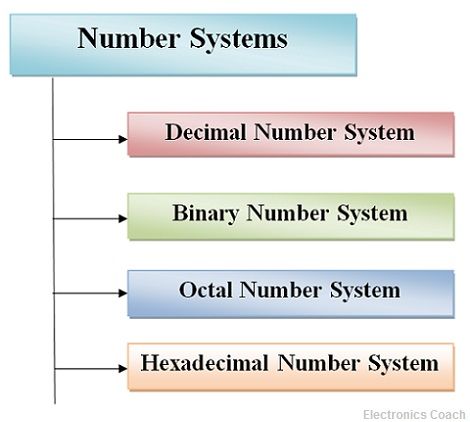
Binary, octal, decimal, hexadecimal number systems

Computers understand machine language, i.e every letter, symbol etc. that the user writes in the instructions which are provided to the computer gets transformed into machine language. This machine language comprises numbers. To understand the language employed by computers and other digital systems it is essential to have a better knowledge of the number system.

A number system gives a unique representation of numbers. It also enables users to execute arithmetic operations like subtraction, addition, and division which perform an essential role in computer applications and digital domains.

Number systems can be categorized into their sub types based on the base of that system. The base of a number system performs a vital role in understanding the number system and converting it from one sub-type to another sub-type. The base sometimes is also referred to as radix; both these terms hold the same meaning.


1. Decimal Number System (Base 10):

  • The most common system we use in everyday life.
  • Uses digits 0-9 to represent numbers.
  • Place value increases by powers of 10 (10^0, 10^1, 10^2, ...).
  • Example: 123 = 110^2 + 210^1 + 3*10^0

2. Binary Number System (Base 2):

  • Essential for computers, which use binary digits (bits) to represent data.
  • Uses only two digits: 0 and 1.
  • Place value increases by powers of 2 (2^0, 2^1, 2^2, ...).
  • Example: 1011 = 12^3 + 02^2 + 12^1 + 12^0 = 11 (in decimal)


3. Octal Number System (Base 8):

  • Uses digits 0-7.
  • Sometimes used in computing for compact representation.
  • Place value increases by powers of 8 (8^0, 8^1, 8^2, ...).
  • Example: 25 (in octal) = 28^1 + 58^0 = 21 (in decimal)


4. Hexadecimal Number System (Base 16):

  • Widely used in computing for memory addresses and color codes.
  • Uses digits 0-9 and letters A-F (A=10, B=11, ..., F=15).
  • Place value increases by powers of 16 (16^0, 16^1, 16^2, ...).
  • Example: 1A (in hexadecimal) = 116^1 + 1016^0 = 26 (in decimal)


Key Points:

  • The base of a number system determines the number of digits used and their place values.
  • Conversions between different number systems are possible using mathematical formulas.
  • Each system has its specific applications in computing and other fields.

ANU B.Pharmacy 1st, 3rd, 5th Sem Supply Exam Results Oct/Nov 2023

 ANU B.Pharmacy 1st, 3rd, 5th Sem Supply Exam Results Oct/Nov 2023 are now available, the candidates who are looking for results can check their results from here


Check your results from below links

I/IV B.PHARMACY I SEMESTER SUPPLY EXAMINATIONS NOVEMBER-2023 RESULTS.

II/IV B.PHARMACY III SEMESTER SUPPLY EXAMINATIONS OCTOBER-2023 RESULTS. 

III/IV B.PHARMACY V SEMESTER SUPPLY EXAMINATIONS OCTOBER-2023 RESULTS.

Friday, 5 January 2024

ANU B.Tech 1st, 2nd Year 1st & 2nd Sem Revaluation Results July/Aug 2023

 ANU B.Tech 1st, 2nd Year 1st & 2nd Sem Revaluation Results July/Aug 2023 are now available, the candidates who are looking for results can check their results from here

Check your results from below link

  1.  II/IV B.TECH II SEMESTER REGULAR EXAMINATIONS JULY-2023 REVALUATION RESULTS.
  2. II/IV B.TECH I SEMESTER SUPPLY EXAMINATIONS JULY-2023 REVALUATION RESULTS. 
  3. I/IV B.TECH II SEMESTER REGULAR EXAMINATIONS AUGUST-2023 REVALUATION RESULTS. 
  4. I/IV B.TECH I SEMESTER SUPPLY EXAMINATIONS AUGUST-2023 REVALUATION RESULTS.

Saturday, 30 December 2023

Acharya Nagarjuna University ANU UG 5th, 6th Sem Adv Supply Exam Results Nov 2023 @ Available Now

The much-awaited Acharya Nagarjuna University (ANU) UG 5th, 6th Sem Adv Supply Exam Results for November 2023 are finally out son! Students who appeared for the supplementary examinations can now check their results online on the official university website or through the university's mobile app.

Key Highlights

  • ANU UG 5th, 6th Sem Adv Supply Exam Results for November 2023 are available online
  • Students can access their results on the university's website or via the official mobile app
  • Results are available in PDF format
  • Students can also download their mark sheets online


How to Check Results

Checking your ANU UG 5th, 6th Sem Adv Supply Exam Results for November 2023 is a straightforward process:

  1. Visit the ANU website

  2. Click on the 'Results' tab

  3. Select 'UG/Degree' from the drop-down menu

  4. Choose 'Supply' from the drop-down menu

  5. Select '5th Sem' or '6th Sem' from the drop-down menu

  6. Enter your roll number and date of birth

  7. Click on 'Submit'

Your results will be displayed on the screen. You can also download your mark sheets online for future reference.

Important Dates

  • Last date for applying for revaluation: [Date]

We congratulate all students who successfully cleared the ANU UG 5th, 6th Sem Adv Supply Exams in November 2023. For those who couldn't achieve their desired results, revaluation applications are open until [Date]. We hope this blog post has been helpful. Please feel free to reach out if you have any further questions.

 Acharya Nagarjuna University ANU UG 5th Sem Adv Supply Exam Results Nov 2023

Acharya Nagarjuna University ANU UG 6th Sem Adv Supply Exam Results Nov 2023

Thursday, 28 December 2023

Friday, 15 December 2023

ANU B.Ed 3rd Sem Regular Jan 2024 Exam Time Table

 Acharya Nagarjuna University B.Ed 3rd Sem Regular Jan 2024 Exam Time Table is now available. The exams are commencement from 24.01.2024

Download official Time Table from below


ANU UG/Degree 1st Sem reg/Supply Exam Timetables Revised January/Feb 2024

ANU UG/Degree 1st Sem reg/Supply Exam Timetables January/Feb 2024 are now available and the exams are commencement from 27.12.2023 ( Y23 Batch) and Supply from 19.12.2023


Download official timetable from below links

ANU UG/Degree 1st Sem Reg Exam Timetables January 2024 (Y23 Batch)

ANU UG/Degree 1st Sem Supply Exam Timetables January 2024

ANU PG (M.A, M.Com, M.Sc) 3rd Sem Reg Exam Results Oct 2023

 ANU PG (M.A, M.Com, M.Sc) 3rd Sem Reg Exam Results Oct 2023 are now available, the candidates who are looking for results can check their results from here


Check your results from below links

14.11.2023

  1. M.A. ARCHAEOLOGY III SEMESTER REGULAR EXAMINATIONS OCTOBER-2023 RESULTS.
  2. M.A. HINDI III SEMESTER REGULAR EXAMINATIONS OCTOBER-2023 RESULTS. 
  3. MASTER LIBRARY & INFORMATION SCIENCE III SEM REGULAR EXAMINATIONS OCTOBER-2023 RESULTS. 
  4.  M.A. URDU III SEMESTER REGULAR EXAMINATIONS OCTOBER-2023 RESULTS.
  5. M.A. ENGLISH III SEMESTER REGULAR EXAMINATIONS OCTOBER-2023 RESULTS. 
  6. M.A. PUBLIC ADMINISTRATION III SEMESTER REGULAR EXAMINATIONS OCTOBER-2023 RESULTS. 
  7. M.H.R.M. III SEMESTER REGULAR EXAMINATIONS OCTOBER-2023 RESULTS. 

17.11.2023

  1. M.A. SANSKRIT III SEMESTER REGULAR EXAMINATIONS OCTOBER-2023 RESULTS. 
  2.  M.SC. BIO-TECHNOLOGY III SEMESTER REGULAR EXAMINATIONS OCTOBER-2023 RESULTS.
  3. M.SC. ELECTRONICS & INSTRUMENTATION TECHNOLOGY III SEM REGULAR EXAMINATION OCTOBER-2023 RESULTS. 
  4. M.SC. OILS & FATS III SEMESTER REGULAR EXAMINATIONS OCTOBER-2023 RESULTS.

18.11.2023 

  1. M.A. SOCIOLOGY III SEMESTER REGULAR EXAMINATIONS OCTOBER-2023 RESULTS. 
  2. MASTER OF SOCIAL WORK III SEMESTER REGULAR EXAMINATIONS OCTOBER-2023 RESULTS. 

24.11.2023

  1. M.Sc., YOGA FOR HUMAN EXECELLENCE II YEAR REGULAR EXAMINATIONS AUGUST-2023 RESULTS. 
  2. M.SC. ZOOLOGY III SEMESTER REGULAR EXAMINATIONS OCTOBER-2023 RESULTS. 
  3. M.SC. STATISTICS III SEMESTER REGULAR EXAMINATIONS OCTOBER-2023 RESULTS. 
  4. M.SC. NANO-BIOTECHNOLOGY III SEMESTER REGULAR EXAMINATIONS OCTOBER-2023 RESULTS. 
  5. M.SC. BOTANY III SEMESTER REGULAR EXAMINATIONS OCTOBER-2023 RESULTS. 
  6. M.SC. AQUACULTURE III SEMESTER REGULAR EXAMINATIONS OCTOBER-2023 RESULTS. 
  7. M.C.A III SEMESTER REGULAR EXAMINATIONS OCTOBER-2023 RESULTS. 
  8. M.A. TELUGU III SEMESTER REGULAR EXAMINATIONS OCTOBER-2023 RESULTS. 
  9. M.A. POLITICAL SCIENCE III SEMESTER REGULAR EXAMINATIONS OCTOBER-2023 RESULTS. 
  10. M.A JOURNALISM & MASS COMMUNICATION III SEM REGULAR EXAMS OCTOBER-2023 RESULTS. 
  11. M.A. HISTORY III SEMESTER REGULAR EXAMINATIONS OCTOBER-2023 RESULTS. 
  12. M.A. ECONOMICS III SEMESTER REGULAR EXAMINATIONS OCTOBER-2023 RESULTS.

25.011.2023

  1. M.COM III SEMESTER REGULAR EXAMINATIONS OCTOBER-2023 RESULTS.

 29.11.2023

  1. M.SC. PSYCHOLOGY III SEMESTER REGULAR EXAMINATIONS OCTOBER-2023 RESULTS.
  2. M.SC. PHYSICS III SEMESTER REGULAR EXAMINATIONS OCTOBER-2023 RESULTS. 
  3. M.SC. ENVIRONMENTAL SCIENCE III SEMESTER REGULAR EXAMINATIONS OCTOBER-2023 RESULTS. 
  4. M.SC. BIO-CHEMISTRY III SEMESTER REGULAR EXAMINATION OCTOBER-2023 RESULTS.

01.12.2023

  1. M.SC. FOOD SCIENCE, NUTRITION & DIETETICS III SEMESTER REGULAR EXAMINATIONS OCTOBER-2023 RESULTS.
  2. M.SC. FORENSIC SCIENCES III SEMESTER REGULAR EXAMINATIONS OCTOBER-2023 RESULTS. 
  3. M.SC. SOIL SCIENCE & AGRICULTURAL CHEMISTRY III SEMESTER REGULAR EXAMINATIONS OCTOBER-2023 RESULTS. 

02.12.2023 

  1. M.VOC HORTICULTURE & LANDSCAPE GARDENING III SEMESTER REGULAR EXAMINATIONS OCTOBER-2023 RESULTS.
  2. M.VOC FOOD PROCESSING & QUALITY MANAGEMENT III SEMESTER REGULAR EXAMINATIONS OCTOBER-2023 RESULTS. 
  3. M.SC. GEOLOGY III SEMESTER REGULAR EXAMINATIONS OCTOBER-2023 RESULTS. 
  4. M.SC. FORENSIC SCIENCES III SEMESTER REGULAR EXAMINATIONS OCTOBER-2023 RESULTS.

05.12.2023

  1. M.SC. MICROBIOLOGY III SEMESTER REGULAR EXAMINATIONS OCTOBER-2023 RESULTS.
  2. M.SC. MATHEMATICS III SEMESTER REGULAR EXAMINATIONS OCTOBER-2023 RESULTS. 

08.12.2023

  1. M.SC. COMPUTER SCIENCE III SEMESTER REGULAR EXAMINATIONS OCTOBER-2023 RESULTS.
15.12.2023
 

Sunday, 10 December 2023

ANU UG/Degree 1st Sem Communication Skills Important Questions (Skill Enhancement Courses)

 ANU UG/Degree 1st Sem Communication Skills Important Questions (Skill Enhancement Courses) are now available. These questions are prepared by top experienced faculty. By preparing these questions you can get good marks in your external exams.


 UNIT-I BASICS OF COMMUNICATION 

Nature and importance of communication, Process of Communication, Principles of communication,  Barriers to effective communication, Strategies for effective communication

Short Answer Questions
  1. What are the three main elements of communication?
  2. What is the difference between encoding and decoding in the communication process?
  3. What are two key barriers to effective communication?
  4. What is the importance of active listening in communication?
  5. What is one strategy for overcoming nonverbal communication barriers?
Long Answer Questions
  1. Explain the three main principles of effective communication and provide examples of each.
  2. Analyze the various factors that can contribute to misunderstandings in communication.
  3. Discuss how different communication channels (e.g., verbal, written, nonverbal) can impact the effectiveness of communication.
  4. Describe how cultural differences can affect communication and suggest strategies for overcoming these challenges.
  5. Compare and contrast different communication styles (e.g., assertive, passive, aggressive) and discuss their impact on interpersonal relationships.

UNIT-II: PRESENTATION SKILLS 

Preparation of a good presentation,Verbal communication in presentation, Non-verbal communication in presentation,Visual aids/Materials in presentation, Analyzing audience and managing questions

Short Answer Questions
  1. What are the three key steps in preparing a good presentation?
  2. What are three tips for effective verbal communication during a presentation?
  3. Name two important non-verbal cues to be aware of while presenting.
  4. What are the two main types of visual aids used in presentations?
  5. What are two strategies for managing audience questions effectively?
Long Answer Questions
  1. Explain the importance of audience analysis in designing and delivering presentations.
  2. Describe the different types of delivery methods for presentations and discuss their pros and cons.
  3. Analyze the role of storytelling in enhancing audience engagement during presentations.
  4. Discuss the ethical considerations involved in using visual aids and multimedia in presentations.
  5. Compare and contrast the effectiveness of online vs. in-person presentations, highlighting the specific challenges and opportunities of each format.

UNIT-III: INTERVIEWS AND GROUP DISCUSSIONS 

Interview and its types, Before, during and after an interview, Do’s and Don’ts in an interview, Basic Interview questions, Structure and process of Group Discussions, Role functions, Do’s and Don’ts 

Short Answer Questions
  1. What are the two main types of interviews?
  2. What are three important things to do before an interview?
  3. What are two essential nonverbal communication skills to demonstrate during an interview?
  4. Give an example of a "Do" and a "Don't" during an interview.
  5. What is the purpose of a group discussion in an interview process?
Long Answer Questions
  1. Describe the various stages of an interview, from preparation to follow-up.
  2. Analyze the different types of interview questions (e.g., behavioural, situational, technical) and provide strategies for answering them effectively.
  3. Discuss the importance of teamwork and leadership skills in a group discussion and suggest strategies for demonstrating these abilities.
  4. Compare and contrast the different roles (e.g., initiator, summarizer, moderator) one can take on during a group discussion.
  5. Evaluate the effectiveness of different group discussion formats (e.g., case study, role-play) and discuss the specific challenges and opportunities of each format.

ANU UG/Degree 1st Sem Analytical Skills Important Questions (Skill Enhancement Courses)

ANU UG/Degree 1st Sem Analytical Skills Important Questions (Skill Enhancement Courses) are now available. These questions are prepared by top experienced faculty. By preparing these questions you can get good marks in your external exams.


 UNIT – 1

Arithmetic ability: Algebraic operations BODMAS, Fractions, Divisibility rules, LCM & GCD (HCF). 

Verbal Reasoning: Number Series, Coding & Decoding, Blood relationship, Clocks, Calendars

Arithmetic Ability:

  1. Simplify the expression: 2 + 3 * 5 - 4 / 2
  2. Convert the mixed number 3 1/2 to a fraction.
  3. List the divisibility rules for 4 and 8.
  4. What is the LCM of 12 and 18?
  5. What is the average of 10, 12, 14, and 16?

Fractions:

  1. Simplify the fraction 12/36.
  2. Add the fractions 1/4 and 1/6.
  3. Subtract the fractions 5/8 and 2/3.
  4. Multiply the fractions 3/4 and 2/5.
  5. Convert the decimal 0.75 to a fraction.

Number Series:

  1. Find the next term in the series: 2, 5, 8, 11, ...
  2. What is the missing term in the series: 3, 6, 9, ___, 15?
  3. Solve the equation: x + 5 = 10
  4. What is the sum of the first 5 natural numbers?
  5. What is the greatest common factor of 12 and 16?

Coding & Decoding:

  1. Decode the message: UIF FYQMPZ JT WBMVF.
  2. What is the Caesar cipher with shift 3?
  3. Encode the message: "Meet me at the park" using a simple substitution cipher.
  4. Decode the message: 12 5 1 14 19 7 20 8 5
  5. Explain the difference between a substitution cipher and a transposition cipher.

Blood Relationship:

  1. If A is the mother of B and B is the brother of C, what is C's relationship to A?
  2. If E is the daughter of F and F is the sister of G, what is the relationship between E and G?
  3. If H is the uncle of I and I is the nephew of J, what is the relationship between H and J?
  4. If K is the son of L and L is the father-in-law of M, what is the relationship between K and M?
  5. If N is the granddaughter of O and O is the wife of P, what is the relationship between N and P?

Clocks:

  1. What time is it 3 hours after 8:00 AM?
  2. How many minutes are there between 10:15 AM and 12:30 PM?
  3. If a train leaves at 5:45 PM and arrives at its destination at 8:30 PM, how long is the journey?
  4. What time will it be 45 minutes after 6:15 PM?
  5. If a meeting starts at 10:00 AM and lasts for 2 hours, what time does it end?

Calendars:

  1. What is the day of the week on May 25, 2023?
  2. How many days are there between February 1st and April 30th in a non-leap year?
  3. What is the Julian date for December 25th, 2023?
  4. How many days are there in the month of November?
  5. What is the Chinese Zodiac sign for the year 1998?

 UNIT-II

Quantitative aptitude: Averages, Ratio and proportion, Problems on ages, Time-distance – speed. 

Business computations: Percentages, Profit & loss, Partnership, simple compound interest.

Short Answer Questions

Quantitative Aptitude:

  1. Calculate the average of 10, 12, 14, and 16.
  2. What is the ratio of 2 meters to 80 centimeters?
  3. If A is 2 years older than B and B is 10 years old, how old is A?
  4. If a car travels 120 kilometers in 2 hours, what is its speed?
  5. What is the simple interest on a sum of $1000 at 5% interest compounded annually for 2 years?

Business Computations:

  1. Calculate a 15% discount on a price of $20.
  2. If the cost price of an item is $100 and the selling price is $120, what is the profit percentage?
  3. If A and B invest $1000 and $2000 respectively in a business for 6 months, how should the profit be divided?
  4. Calculate the compound interest on a sum of $5000 at 4% interest compounded annually for 5 years.
  5. A shop owner buys a watch for $80 and sells it for $100. What is the percentage mark-up?
Long Answer Questions

Quantitative Aptitude:

  1. Solve the word problem: A train travels 200 kilometers in 4 hours. If it stops for 30 minutes during the journey, what is the average speed of the train?
  2. Explain the concept of weighted average and give an example of its application.
  3. A farmer has 100 chickens. If the ratio of hens to roosters is 3:2, how many hens and roosters does he have?
  4. Two cars leave a city at the same time, travelling in opposite directions. One car travels 60 km/h and the other travels 80 km/h. How far apart will they be after 3 hours?
  5. Explain the difference between speed, velocity, and acceleration.

Business Computations:

  1. A company makes a profit of 20% on its sales. If the total sales amount to $100,000, what is the profit amount?
  2. Two partners invest $50,000 and $75,000 respectively in a business for a year. If the total profit is $30,000, how should the profit be divided?
  3. Explain the difference between simple interest and compound interest and provide examples of their applications.
  4. Calculate the break-even point for a product that has a variable cost of $5 per unit and a selling price of $10 per unit.
  5. A company borrows $100,000 at an annual interest rate of 10%. If the company makes annual payments of $20,000, how many years will it take to pay off the loan?

 UNIT – 3: Data Interpretation

Tabulation, Bar Graphs, Pie Charts, line Graphs. Venn diagrams. 

Short Answer Questions
  1. What is the difference between a bar graph and a histogram?
  2. When is a line graph the most appropriate choice for data visualization?
  3. How can you determine the central tendency of a dataset from a pie chart?
  4. What information is conveyed by the different segments in a Venn diagram?
  5. How can you calculate the percentage of a specific category from a bar graph without a legend?
Long Answer Questions
  1. Analyze the given data table and answer the following questions:
    • Identify the trends and patterns in the data.
    • Compare and contrast the values for different categories.
    • Which category exhibits the highest/lowest values?
  2. Create a suitable graph or chart to represent the provided data and explain your reasoning.
  3. Analyze and compare the information presented in two different data visualizations.
  4. Interpret the relationships between different categories based on a given Venn diagram.
  5. Use the provided data to solve a real-world problem or make predictions about future trends.

Latest Notifications

More

Results

More

Timetables

More

Latest Schlorships

More

Materials

More

Previous Question Papers

More

All syllabus Posts

More

AI Fundamentals Tutorial

More

Data Science and R Tutorial

More
Top